An independent community heritage project

The heritage projectPeopleBenoy Choudhury

Benoy Choudhury

Benoy Choudhury began in revolutionary politics.

Last updated:

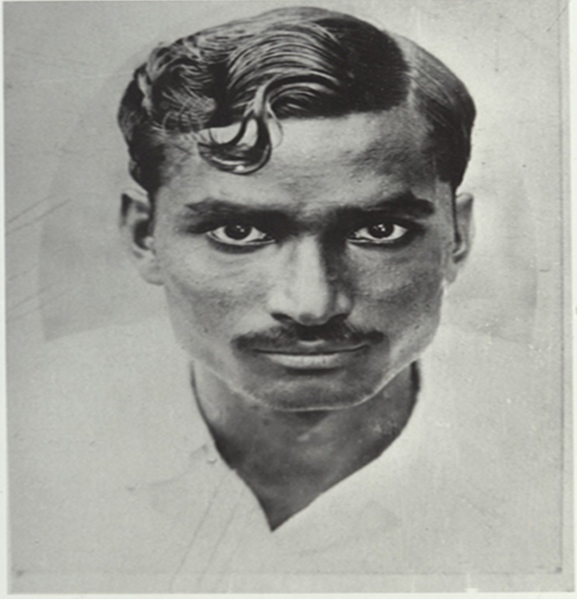
An early black-and-white portrait of Benoy Choudhury
Early portrait of Benoy Choudhury. Photographer unknown. Wikimedia Commons dates it before 1960 and marks it public domain in India.
Cite this page

Aguri Heritage. “Benoy Choudhury.” Last updated: . https://aguri-heritage.in/person-benoy-choudhury.

Citing this page does not grant permission to republish it. Copyright & reuse.

Communist politics · Land reform · Rural development

Life and work

1911–2000 · Freedom fighter and CPI(M) leader[1]

Benoy Choudhury began in revolutionary politics. In an interview-based recollection, he places his entry to Serampore College with Saroj Mukherjee, and his joining Jugantar, in 1928. He also recalls meeting Bhupendranath Datta that year and attending Datta’s classes for revolutionaries.[2]

He described leading Burdwan’s Satyagrahi group in 1930, influenced by Vivekananda’s concern for ordinary people.[2] He joined the Communist Party in 1938 and defeated Burdwan’s former Maharaja in the 1952 Assembly election.[3]

As a minister after the Left Front’s 1977 victory, he helped lead land reform and panchayat development, particularly Operation Barga, which recorded sharecroppers’ rights. The party’s memorial credits his combination of legal knowledge and peasant organisation in implementing reform.[3] Earlier, as leader of the Krishak Samiti in Burdwan after the first United Front government took office in 1967, he toured village meetings across Raina denouncing the looting that had spread there: “Looting is not our ideology” (Ruud, pp. 109–110).[4]

Andrew Whitehead’s recorded interview of June 1992 preserves his recollections of revolutionary activism, imprisonment, communism and land reform.[1] The University of Burdwan renamed its Rural Technology Centre in his memory in 2000; the centre supports practical training and rural livelihoods.[5]

Explore the recorded interview ↗

Dutta explicitly names him among Ugra Kshatriya figures in the freedom movement and later political life, in Explorations in Colonial Bengal (2023), p. 314.[6]
The Shared HarvestAn illustration inspired by this life and work

Explore all featured personalities →

How the collection was selected

Notes & sources

  1. Andrew Whitehead, “Communist Voices: Benoy Choudhury” — interview, June 1992. The interviewer’s written introduction was read. Audio is linked for further exploration; no transcript or direct quotation is claimed. Source details
  2. Benoy Choudhury, “আমার বিপ্লবী জীবনে বিবেকানন্দ”. Read fully. Original interview/date unidentified; college-entry chronology conflicts with a government summary. Source details
  3. CPI(M) Polit Bureau — memorial statement for Benoy Krishna Chaudhury. Partisan tribute, read directly. Web date and birth-day discrepancies are not adopted. Source details
  4. Arild Engelsen Ruud, Poetics of Village Politics: The Making of West Bengal’s Rural Communism (2003). Chapters 2–5 read in the supplied scan, with all Aguri passages located by full-text search. Village and personal names in the book are the author’s; the villages are deliberately disguised and should not be identified with real places. Source details
  5. University of Burdwan — Benoy Krishna Choudhury Rural Technology Centre. Official university page read directly. Used for his institutional commemoration, not as evidence of community affiliation. Source details
  6. Achintya Kumar Dutta, “Prosperity, Dominance, and Social Mobility: Emergence of a Mobile Caste in Colonial Southwest Bengal” (2023), pp. 297–324. Complete chapter, including endnotes and references, read directly in the supplied book. Page references use its printed pagination. Origin hypotheses remain attributed to the author. Link opens the publisher’s book record. Source details

Search the heritage project

Enter a word or phrase to begin.

For Bengali text inside the journals, use the journal reader.