Communist politics · Land reform · Rural development
Life and work
1911–2000 · Revolutionary organiser and land reform minister[1]
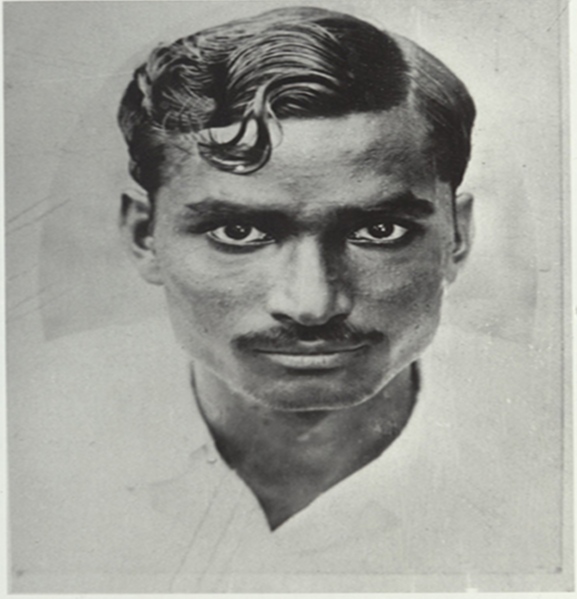
Benoy Choudhury was a revolutionary organiser, freedom fighter and communist leader who served as West Bengal’s land and land reforms minister from 1977 to 1996. He helped carry peasant demands into government through land reform and the protection of sharecroppers’ rights.[2][3]
A life in the struggle over land
For a sharecropper in rural Bengal, having a name entered in a government register could make a lasting difference. It strengthened the right to cultivate a field and offered protection against eviction. Benoy Choudhury helped bring these rights into the everyday lives of cultivators as West Bengal’s land and land reforms minister from 1977 to 1996.[4][3]
Long before he became a minister, he had been a young revolutionary, a political prisoner and an organiser among workers and peasants. Born in 1911, he lived through the freedom struggle and the rise of the Left to government. His career connected the hopes of that earlier generation with the practical work of changing relations between landowners and cultivators.[5][2][1]
Family and early life
Choudhury was born at his maternal uncle’s home in Sutra, in the Monteswar area of Burdwan district. His ancestral village was Sihi. His father, Girindranath Choudhury, worked as a stamp vendor at Burdwan Court; his mother was Bilashini Devi. He attended Burdwan Municipal High School.[5]
A later commemorative tribute describes a family with land and members engaged in business or service. It puts their joint holding at 165 bighas, an unconfirmed figure for the family as a whole.[6]
His wife was a school headmistress and died before him. Writing after Choudhury’s death, journalist Chanchal Sarkar relayed a friend’s memory of visiting him and finding him calculating the pension he might receive through his late wife. The small domestic scene gives a glimpse of his life beyond meetings and ministerial work.[7]
From Jugantar to communism
In 1928, Choudhury entered Serampore College with his friend Saroj Mukherjee and joined the revolutionary organisation Jugantar. He later recalled how Vivekananda’s concern for poor and neglected people had influenced him. Through Vivekananda’s brother, Bhupendranath Datta, he encountered political teaching that linked the struggle for national freedom with the lives of workers and peasants.[8] He also recalled leading Burdwan’s Satyagrahi group in 1930, influenced by Vivekananda’s concern for ordinary people.[8]
Politics grew alongside a close friendship with Saroj. A Bengali remembrance recalls the two composing alternate lines of a poem, sharing literary interests as well as political commitments. They came into contact with communist organisers Abdul Halim and Muzaffar Ahmad. Muzaffar Ahmad later sent Choudhury to organise workers in Asansol.[9]
Choudhury was first arrested during the Civil Disobedience movement in 1930. Arrested again in the Birbhum conspiracy case in 1933, he received a five-year sentence. In prison he joined the circle of political prisoners known as the Communist Consolidation, studying communist ideas with fellow inmates. After his release in October 1938, he joined the Communist Party.[2]
Among workers and peasants
At Ballavpur, near Raniganj, Choudhury became involved in the paper-mill struggle of 1938–39. Workers demanded better wages and conditions, benefits and recognition of their union. He was among the organisers arrested during the strike. Women including Dasi Bauria, Bhagvantia and Yashovantia helped sustain the struggle through a volunteer organisation. Their efforts were part of the movement in which he worked.[10]
He also took part in Burdwan’s campaign against taxation for canal irrigation. During the war, the British authorities excluded him from the district, and he continued working underground until the Communist Party became legal in 1942.[2]
Political education was another part of his work. Badruddin Umar remembered attending classes at the Burdwan Communist Party office, where Choudhury taught alongside Hare Krishna Konar and Syed Shahedullah. Umar went with relatives despite not belonging to the Student Federation himself. The party office was a place where young people could listen, learn and encounter new political ideas.[11]
The election against the Maharaja
In 1952, Choudhury defeated Uday Chand Mahtab, the Maharaja of Burdwan, in the Burdwan Assembly constituency. The Communist candidate received 11,439 votes against the Congress candidate’s 9,477, winning by 1,962. A man who had spent years organising and enduring imprisonment entered the Assembly after defeating one of the district’s best-known public figures.[12]
When the Communist Party split in 1964, Choudhury joined the CPI(M). The Left Front’s arrival in government in 1977 brought him responsibility for land reform. He held that portfolio until 1996 and also served in the party’s Polit Bureau. His years among cultivators now informed the task of making government respond to their needs.[2][3][13]
Earlier, as leader of the Krishak Samiti in Burdwan after the first United Front government took office in 1967, he toured village meetings across Raina denouncing the looting that had spread there: “Looting is not our ideology” (Ruud, pp. 109–110).[14]
Land reform in village life
Operation Barga began in 1978. Its purpose was to record bargadars, or sharecroppers, and make their legal protections effective. Officials held camps in villages, explained the law and checked who was cultivating particular fields. Registration came closer to people who might hesitate to visit an office or fear displeasing a landowner. Cultivators, organisers and officials all helped put the programme into practice.[4]
Registration protected the right to sharecrop; ownership came through the separate process of land redistribution. Choudhury’s priorities included both recording bargadars and recovering concealed surplus holdings. The crop-sharing provisions entitled a cultivator who supplied the required inputs to three-quarters of the produce. Where the owner supplied them, the prescribed division was half and half.[15]
By 1995, the statewide total of registered bargadars had reached about 14.7 lakh, including earlier registrations. Land reform worked alongside improvements in irrigation, agricultural inputs and local institutions. It also left difficult questions unresolved, especially for agricultural labourers and women seeking rights to land. Choudhury’s work formed part of this wider effort to change rural life.[16]
The minister people remembered
Journalist Amal Sarkar remembered a minister who arrived at functions on time and, if the organisers were not ready, quietly waited in an audience chair. Sarkar also recalled Choudhury refusing a proposed government-funded inverter for his flat. These small encounters stayed in the memories of people who knew him.[3]
His long service did not prevent him from criticising his own government. Towards the end of his ministerial career, he publicly challenged the growing influence of contractors. The contemporary Left journal Liberation reported his criticism of the relationship between contractors and panchayat leadership. The interests served by government remained a concern even after decades in public life.[17]
His later years
In June 1992, Andrew Whitehead interviewed Choudhury in Calcutta for the radio series What’s Left of Communism? The recording preserves his voice recalling Jugantar, prison, peasant politics and land reform. His English memoir, My Life & Experiences, appeared in 1999.[1][18]
Choudhury died on 6 May 2000. His body was donated to Nilratan Sarkar Medical College and Hospital for medical teaching.[2][19]
The University of Burdwan renamed its Rural Technology Centre in his memory in 2000; the centre supports practical training and rural livelihoods.[20]
Explore the recorded interview ↗
Dutta explicitly names him among Ugra Kshatriya figures in the freedom movement and later political life, in Explorations in Colonial Bengal (2023), p. 314.[21]