New to the subject
Begin with people and change
Start with the short History guide, then choose a book below that follows the question that caught your interest.
Browse the scholarly reading shelf ↓The heritage projectResources
Sourced from the Aguri Heritage project.
https://aguri-heritage.in/bibliography
Original project material: all rights reserved. Other material retains its own rights. Copyright & reuse
Books, scholarship, biographies, periodicals and translated source material supporting the community’s story.
Last updated:
From the original
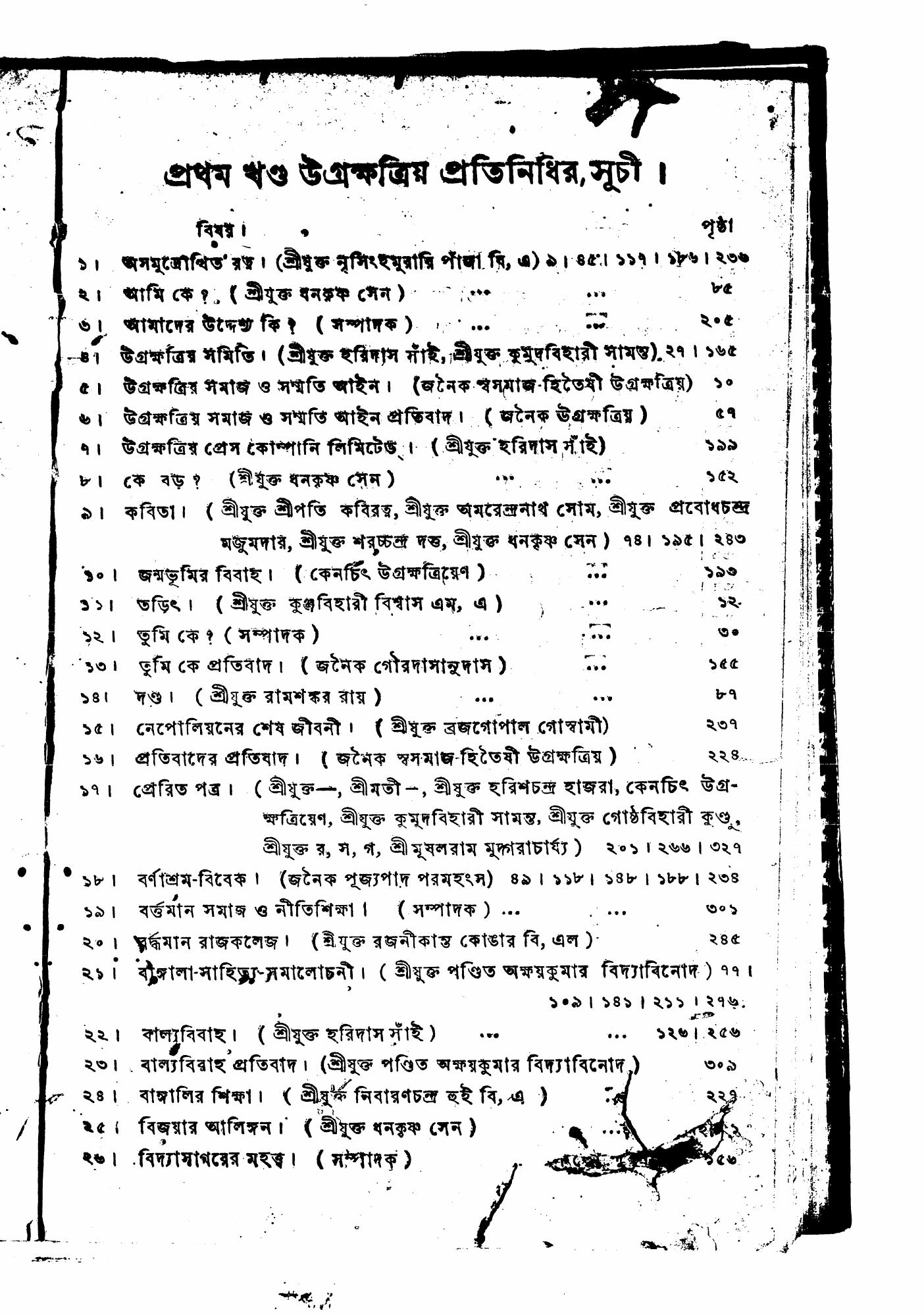
Aguri Heritage. “Resources for exploring Aguri heritage.” Last updated: . https://aguri-heritage.in/bibliography.
Citing this page does not grant permission to republish it. Copyright & reuse.
From a question to a source
Explore the books, research, biographies and historical publications that support this website’s account of the Aguri community.
Begin with a short reading, follow a family lead, or look for the document behind a claim. The book descriptions explain why you might open a work; the details record the pages consulted and the limits of access.
New to the subject
Start with the short History guide, then choose a book below that follows the question that caught your interest.
Browse the scholarly reading shelf ↓A family or village
Use the surname guide and its five-part family checklist. A shared name alone cannot establish a family connection.
Explore places and the map →An old publication
Browse journal scans or compare a book, article or preface with its translation and source notes.
Choose from six shorter readings ↓Checking a claim
Follow an article’s citation to its source, edition, printed page and access note. Keep the record, its interpretation and later recollection distinct.
Understand the source labels ↓Original Bengali journal identifies a community publication. Colonial ethnography records an outside classification in its historical setting. Scholarship identifies an attributed research work.
The labels describe the kind of evidence and our access to it. They are not a simple ranking of truth. An original publication can contain argument, error, aspiration or prejudice; identifying the author’s standpoint remains part of the work.
These topics filter the collections, shorter readings and selected books below. The selected bibliography below groups research, historical sources and substantial essays.
20 reading routes
No reading matches this topic. Choose all reading.
Research questions
Explore questions about Nagadee origins, Burdwan estate records, kul panjikas, oral histories and inequality today. These are directions for inquiry, not a claim that every project is active.
Periodicals · 1891–93
Browse the two preserved volumes of Ugrakshatriya-Pratinidhi, with scanned pages, a journal reader and selected reading notes.
English readings & Bengali sources
A historical book, five complete selections and one opening-page extract. Compare the translations with their Bengali sources and scope notes.
Historical book · revised edition, 1940
Read Haricharan Bandhu’s community-history argument through the Bengali original or the 98-page English translation. Two printed pages are missing from the digitised original.
These two reading copies bring together Bengali transcriptions and English translations of eight family chapters. Uncertain readings are marked; a second-reader proofread remains pending. Each document identifies its original volumes and pages.
Bengali & English · PDF
Kundu of Itachuna, Hati of Adhra, Hazra of Kurchi, Chaudhuri of Putsuri, Ray of Shanko, Pal of Hitta and Burdwan, and Hazra of Bilwagram. From volumes II, III, VI and XIV, published between 1921 and 1934.
Open the seven family entries (PDF · 1.03 MB)Bengali & English · PDF
The complete Sahana chapter from volume XII (1932), printed pages 77–106, with photographs and the family tree. Includes the account of Satya Kinkar Sahana and his household.
Open the Sahana chapter (PDF · 1.41 MB)The entries preserve family accounts and claims. For their historical interpretation, read Reading the Bangsha Parichay.
Every page identifies its original scans, page references and scope. Read the modern context separately from the historical author’s words.
Complete essay · 1891
A Bengali science essay opens a window onto language and learning. Its explanations belong to 1891 and are not a modern science or safety guide.
Complete article · 1892
The Representative tells readers about its beliefs, work on community history and the practical difficulty of staying in print. The judgements are the historical editor’s.
Opening-page extract · 1891
Read the devotional opening of the editor’s first address, then compare it with the later account of publishing difficulties. Only the opening page is included; damaged readings are marked.
Complete publisher’s note · 1940
An appeal for unity and a new edition, with the people who helped publication. Claims of ancestry remain the publisher’s presentation of the book’s argument.
Complete author’s foreword · 1940
Haricharan Bandhu explains his revisions and thanks scholars and patrons. A mention in the foreword is not a separately verified biography.
Complete review · 1915
Prabasi introduces an earlier edition to Bengali readers. Read its judgement alongside the book; the review predates the 1940 revision and does not prove its origin theory.
These four works inform the accounts of origins, enterprise, landholding and social reform. References throughout the site use printed page numbers.
Read this to explore how land, business and reform changed Aguri family fortunes.
A chapter devoted to Aguri / Ugra Kshatriya history, in Explorations in Colonial Bengal, pp. 297–324. Its four main sections examine caste status (pp. 299–306), prosperity and power (pp. 306–311), sociocultural activity (pp. 311–314), and social mobility (pp. 314–319). The full chapter and notes were consulted.[1]
The chapter identifies an earlier version published in 2011. Its 2023 publication should not be mistaken for wholly new fieldwork.
Read this to ask why accounts of caste, migration and Aguri origins differ.
A wider history of Bengal’s social organisation through literary and historical records. Its Aguri passages discuss Rarh, Gopbhum and the Jana/Sutto division (pp. 48–49), the Burdwan zamindari (p. 178), landholding (p. 198), the 1872 census (p. 232), and changing identities, the sacred thread and classifications (pp. 242–252). Selected bibliography lists the pages consulted.[2]
Bhaumik recounts a Rajasthan–Man Singh migration tradition; Dutta retains uncertainty about origins. Reading the accounts together makes their different interpretations visible.
Read this to explore how a temple’s ritual year connected families, service land and village authority in Kshiragram.
An anthropological study of Kshiragram and its Jogadya temple, based on fieldwork in 1994–95 and first written as a 1996 University of North Bengal thesis. It records the nine Ugra Kshatriya lineages, their service land from the Bardhaman Maharaja, their places in the temple’s ritual year, their lineage Durga Pujas and a Raychaudhuri family chart.[3]
A single village seen in one period, but the closest view yet of how Aguri lineages, Brahman priests, Bagdi servants and the Raj fitted together.
Read this to ask how landholding and alliances shaped village politics in the 1990s. The study’s village names are pseudonyms.
A political anthropology of two Raina villages in the Dakshin Damodar, studied in 1992–93 under fictitious names. In one of them Aguris were the dominant caste, and Ruud traces their landholding, their village leadership and its alliance with Bagdi leaders, and the coming of the CPI(M).[4]
Useful for twentieth-century family history, and for the Raina careers of Dasarathi Tah and Benoy Choudhury.
Books and Bengali publications now inform the English articles. Start with these four works; the catalogue below records which pages or records were consulted.
Read this to explore how a community historian argued for an account of ancestry. Its claims need to be read as the author’s argument.
Rajputs and Ugra Kshatriyas, compiled by Haricharan Bandhu, second edition. An English translation covers the prefaces, all nine chapters and the surviving conclusion. Two printed pages are missing from the digitised original.
Read this to see how an earlier edition was presented to literary readers in 1915, before the 1940 revision.
A contemporary review of an earlier edition of Rajput O Ugrakshatriya, printed pp. 470–471. Both scanned pages were visually checked.
Read this to ask why a shared surname cannot by itself establish community membership. Only the online introduction has been consulted.
Lokeshwar Basu’s The History of Our Surnames. The online introduction helps explain why surnames alone cannot establish community identity; the printed edition has not been checked.
Open the publisher’s listing for political essays and recollections by Benoy Konar. The full book has not been read for this site.
Benoy Konar’s Selected Political Essays, Memories and Remembrance, published by National Book Agency. A further-reading recommendation based on the publisher’s listing; the full book has not been read for this edition.
Bengali reports also contribute to the account of Yogadya worship and the biographical collection. Their English summaries are original paraphrases, with sources beside the relevant passages.
Drawn primarily from the project’s research catalogue, this selection brings together academic books, research articles and substantial essays. Historical and documentary sources are grouped separately. News reports, social posts and routine reference pages remain in the notes of the articles that use them.
97 selected works and source collections
Cambridge University Press, Cambridge South Asian Studies 53. Village “oligarchies” of dominant peasants, “typically Aguris, Kaibartas, or Sadgops” (pp. 54–55); “the raja of Burdwan’s naqdi or cash-paid army”, whose salaries fell from about Rs 4 lakh to just over Rs 1 lakh in 1761–67, and the 1760s table of 32,032 land-paid servants (pp. 117–118); chapter 6, “Mughal Burdwan and the rise of the Burdwan raj” (pp. 125–138): Burdwan as a Mughal garrison town, the Khatri origins of the Raj family, Abu Rai’s appointment (p. 134), Krishnaram Rai’s farman of 1695–96 (p. 137) and the revolt of 1696–97 (p. 129); Gopbhum, Oldham’s Khatri–Sadgop theory and the Aguris (pp. 157–160); the Raja’s unpaid troops and the battle of 29 December 1760 (pp. 183–185); Johnstone’s payroll cut and the 1767 reduction of the “naqdi or household guard” from 1,487 to 839 (p. 192); Kinloch’s 1787 halving of the zamindari troops to 1,000 (p. 263); 17,384 village paiks in 1794 (p. 271). Printed pp. 125–126 describe Burdwan’s embankments, flood damage and cultivators cutting banks for irrigation.
Read directly from the full Cambridge PDF (October 2026): pp. 54–55, 117–118, 125–138, 157–160, 183–185, 192, 263 and 271. McLane uses the Chandimangal, dated 1589 and quoted through Dimock and Inden’s translation, to treat the Aguris as older than the Khatris in Burdwan; this website records that reading and its limits on the Origins page. McLane does not connect the Aguris with the Raj’s naqdi (cash-paid) army or any other troops.
Routledge, 2026 (© Anthropological Survey of India). ISBN 9781041033073; DOI 10.4324/9781003625667. An ethnography of food and social relations in four Rarh villages in Paschim Medinipur, Jhargram, Bankura and Birbhum. The introduction, citing Porter’s 1931 census report (pp. 230–242), places agriculturist castes “such as Sadgop, Goala, and Aguri” in undivided Bardhaman and parts of Birbhum (p. 7).
Only the publisher’s preview (front matter, chapter 1 and references) was read. The single Aguri mention is a regional census observation; none of the four study villages is in Bardhaman.
Chapter 13 in Achintya Kumar Dutta (ed.), Explorations in Colonial Bengal: Essays on Religion, Society, and Culture. Hyderabad: Orient BlackSwan, 2023. ISBN 9789354425134. Origins and military service: pp. 299–303; population tables: pp. 305–306; enterprise and landholding: pp. 306–311; Hazras of Anguna: pp. 308–309; associations and public figures: pp. 311–314; identity and status: pp. 314–319. The opening footnote identifies an earlier version published in 2011.
Complete chapter, including endnotes and references, read directly in the supplied book. Page references use its printed pagination. Origin hypotheses remain attributed to the author. Link opens the publisher’s book record.
Routledge, first published 2023 (imprint page). ISBN 9780367557553; DOI 10.4324/9781003146186. Aguri literary references, settlement traditions, Gopbhum and Jana/Sutto divisions: pp. 48–49, with note 134 on p. 65; dominant cultivating castes and the Burdwan zamindari: pp. 166, 178; landholding and patni tenures: p. 198; the 1872 census description: p. 232; identity, sacred thread, Kulinism, census claims and subdivision reform: pp. 242, 244, 247, 252. Manasa, Dharma Thakur and Gajan: pp. 52, 74, 80, 82.
Every Aguri and Ugra Kshatriya passage in the supplied book was located by full-text search and read in context; the rest of the book has not been reviewed. The Rajasthan–Man Singh migration account is presented as an attributed tradition alongside Dutta’s uncertainty about origins. Link opens the publisher’s book record. Its passages on Manasa and Dharma Thakur were read in context on 9 October 2026.
Calcutta University Press, 1926, in two volumes. Surname derivations are cited by the author's own numbered sections: Dalui or Dalai from dalavai, dalapati, a commander of troops (§172); Bhar from bhata, bhrta, glossed “soldier, servant” (§173 and §683); Satra from samanta-raja and Maiti from mahanta (§273); Kongar or Koar from kumara (§284); the lineage affix -ja from jata (§435); Pakrasi from a village name (§455); Chaudhuri described as “a title or surname” (§514–515); Sasmal from sahasra-malla (§532). Also consulted: Bose from vasu (vol. I, p. 431, §233); Koṅgar / Kõar from kumāra and Sā̃tṛā from sāmanta-rāja / sāmanta-rāya (vol. I, p. 520). Ray from raja: vol. I, p. 590, §323.
Section numbers taken from the digitised volumes held by this project; the machine-read text drops §515, so the Chaudhuri passage is cited as §514–515. These are the author's word histories, not histories of any family, and they do not establish the ancestry of anyone bearing a name.
University of California Press. A study of caste and clan rank using Brahman and Kayastha genealogical records in Bengal.
Publisher-hosted introductory and chapter descriptions on JSTOR consulted. A methodological comparison, not evidence that an Aguri kul panjika collection survives or has been inspected.
New Delhi: Manohar, 2006. ISBN 9788173046773. Published version of the author’s 1996 University of North Bengal thesis, based on fieldwork at Kshiragram, Mangalkot block, from January 1994 to April 1995. Introduction (pp. 13–26): the village, the Raj and the temple rebuilt about 1730. Chapter 2 (pp. 49–74): caste table, Jana and Suta Aguri households, the nine Ugra Kshatriya lineages and the Maharaja’s service lands. Chapter 4 (pp. 90–110): the Baishakh festival, including the sacred thread worn by the Datta and Samant representatives (p. 92). Chapter 6 (pp. 130–158): the Durga Pujas of the Ugra Kshatriya lineages and the Raychaudhuri lineage chart (pp. 147–150). Appendix 4 (pp. 194–195): temples founded by the Bardhaman Raj.
Full book read. The study describes one village in 1994–95 and the author’s reconstruction of earlier practice; it is not a survey of all Aguri settlements.
Philadelphia: Institute for the Study of Human Issues. Fieldwork 1970–1975 in “Gondogram” (a pseudonym), Asansol subdivision, Burdwan district, studying how a nearby factory changed economic transactions, social relations and religious practice.
Bibliographic record and abstract consulted through the eHRAF World Cultures catalogue. The book was not read; no Aguri-specific finding is attributed to it.
New Delhi: Oxford University Press, 2003. Fieldwork in 1992–93 in two adjacent villages of Raina I block, Dakshin Damodar, Burdwan, given the fictitious names Udaynala and Gopinathpur. Aguris (“Uggra-Kshatriya”) are Gopinathpur’s dominant caste: population and land table, 1993 (pp. 16–17); the Mandal family and village leadership, 1953–77 (pp. 36–41, 52–53); landownership by caste about 1960 (pp. 115–116); education (p. 86); kin in service and business (pp. 84–85); census shares for Raina and the district (p. 123, n. 21–22 on p. 149); Dasarathi Tah as Raina’s MLA (p. 21).
Chapters 2–5 read in the supplied scan, with all Aguri passages located by full-text search. Village and personal names in the book are the author’s; the villages are deliberately disguised and should not be identified with real places.
Achintya Kumar Dutta, Economy and Ecology in a Bengal District, pp. 26–27, on the Aguri community and Panja; pp. 133–134, on his family’s substantial landholding. In the discussion of the 1930s canal-tax movement, Dutta records that Panja’s family possessed 1,500 bighas of land in Burdwan. Digitised study.
Referenced in the contributor-supplied revised biography, received 11 October 2026; the underlying source has not been independently rechecked for this update.
J. H. Broomfield, Mostly About Bengal, “Four Lives: History as Biography,” pp. 173–180, and “The Rural Parvenu: A Report of Research in Progress,” pp. 243–247. These essays draw upon Sahana family papers and diaries. The former points to election in 1929 and defeat in January 1937; the latter gives 1930 and 1936. The profile therefore uses two Council terms in the 1930s rather than silently resolving the discrepancy. Broomfield’s account of Santal dispossession is attributed to him.
Source and locator supplied in the public-history biography researched on 10 October 2026; used here with the distinctions between contemporary records, family recollection and later interpretation retained. The 1982 publication metadata was independently verified against scan front matter and a book record.
Elite and communal politics in twentieth-century Bengal, using Satya Kinkar Sahana’s diaries among its sources.
Held edition and scope checked against the research catalogue; cited passages retain the access limits noted above.
Partha Chatterjee’s chapter “Caste and Politics in West Bengal” (pp. 88–101) discusses Aguri owner-peasants and political leadership (p. 92). Omvedt edited the collection.
Held edition and scope checked against the research catalogue; cited passages retain the access limits noted above.
Historical analysis of caste, cultural authority and resistance in colonial Bengal; comparative context for reading Aguri status campaigns.
Held edition and scope checked against the research catalogue; cited passages retain the access limits noted above.
Agrarian structure and land relations in Bengal, c. 1760–1850; regional context for Burdwan’s landed society.
Held edition and scope checked against the research catalogue; cited passages retain the access limits noted above.
Tenancy, landlord–raiyat relations and agrarian politics in Bengal, 1920–47. Regional context; the catalogue review did not locate a direct Aguri passage.
Held edition and scope checked against the research catalogue; cited passages retain the access limits noted above.
Places Aguri smallholders alongside Mahishyas and Sadgops in west and central Bengal’s agrarian economy, connecting land, credit and agricultural labour.
The held scan lacks its index; text and the bibliographical essay survive through printed p. 196.
Divinity and gendered ritual roles in Bengal’s Gajan festival. Comparative context for village worship; no direct Aguri-specific finding was verified in the catalogue review.
Held edition and scope checked against the research catalogue; cited passages retain the access limits noted above.
Peasant stratification, landed elites, grain markets and commercialization in late eighteenth-century Bengal, including Burdwan rice-price evidence. Direct Aguri references were not assessed in the catalogue review.
The held scan ends at bibliography p. 369; rear material and the index listed from p. 371 are absent.
Durga Puja, sacrifice and the legitimation of rural power through Kelomal fieldwork. Comparative context; the searchable copy yielded no explicit Aguri reference.
Held edition and scope checked against the research catalogue; cited passages retain the access limits noted above.
Bengali genealogies, royal chronicles and Persianate historical culture provide a framework for evaluating lineage and origin narratives. No explicit Aguri reference was located in the catalogue text review.
The held copy combines Oxford Scholarship Online sections: original work 2009, digital publication 2012. Print front matter and individual pages were not fully collated.
Gajan in Kelomal, with David Curley’s essay on Lausen and kingship in Dharma Mangal. Comparative ritual and literary context; it does not establish Aguri ancestry.
Held edition and scope checked against the research catalogue; cited passages retain the access limits noted above.
Essays connecting caste, agrarian transformation and West Bengal politics, including Aguri prosperous owner-peasants and Burdwan’s Congress leadership (p. 78).
Held edition and scope checked against the research catalogue; cited passages retain the access limits noted above.
Land relations and caste formation in early medieval eastern India. The discussion of the Brhaddharmapurana’s Ugra category offers historical context, not a genealogy of modern Aguris.
Held edition and scope checked against the research catalogue; cited passages retain the access limits noted above.
Sadgop and Tili social mobility, landownership and temple patronage offer comparisons for Aguri status campaigns. The held scan lacks its title leaf and advertised end maps.
Held edition and scope checked against the research catalogue; cited passages retain the access limits noted above.
Economic and legal history of patni and subordinate tenures under the Permanent Settlement. Named Aguri families’ tenures require separate documentary evidence.
Held edition and scope checked against the research catalogue; cited passages retain the access limits noted above.
Caste and political representation in West Bengal, with direct discussions of Aguri landholding, agrarian position and panchayat representation on pp. 142–143, 149 and 155.
Held edition and scope checked against the research catalogue; cited passages retain the access limits noted above.
A landlord-centred history of Uttarpara’s Jaykrishna Mukherjee, useful for studying estate management, agrarian conflict and the context of Aguri tenants. Its perspective should be read alongside tenant and local accounts.
Historical monograph; landlord-centred perspective.
PhD thesis, Department of History, University of Burdwan, 1970; supervisor S. B. Chaudhuri. Shodhganga, CC BY-NC 4.0. Historical background, including the 1696 revolt (pp. 4–16); the action at the pass of the Banka river on 29 December 1760, from Captain White’s letter (pp. 22–24); the Raja’s 32,031 land-paid servants in 1766 (p. 162); the monthly allowance for the “Nugdean” or household troops, 1761–67, from the diwan’s representation of 1 October 1777 (p. 163); the 1767 establishment of 1,487 men, with those dismissed and retained (pp. 164–165); the abolition of the corps in March 1787 (p. 177); and the patni system on the Burdwan estate (chapter 4, pp. 123–154). McLane (1993) cites it as Chakrabarti, “History”.
Read in full through the text layer of the Shodhganga PDFs in October 2026; figures and page numbers checked against that text. The thesis does not record the caste or origin of any of the Raja’s troops.
The Indian Economic & Social History Review 49(1), pp. 73–104. The abstract discusses transport, expanding markets, rice merchants and millers. Its reference list independently names Ugra Kshatriya Pratinidhi, first year, Vol. I, 1298 BY, and a separate Ugra Kshatriya Patrika, 1337 BY.
Publisher’s abstract and references consulted. Full article requires access; no caste-specific conclusions are attributed to unread passages.
The Journal of the Anthropological Survey of India 48(2), June 1999, pp. 1–21. Listed in the author’s University of Burdwan bibliography, pp. 16–17.
Bibliographic record verified in the author’s university bibliography. Full article not consulted; no findings from this article are presented as having been read.
Postgraduate English (Durham University), issue 40, Summer 2020. Discusses the 1871 Uttarpara prize (p. 2) and Lal Behari Day’s portrayal of Aguri peasants confronting the zamindar, which presents their fierceness and other castes’ passivity as natural caste qualities (pp. 18–19).
Passages on Day’s novel consulted online on 8 October 2026. Used for its reading of the novel, not as evidence of Aguri history.
Indian Journal of Dermatology 60(6), pp. 527–536. Ganapati Panja’s dermatology and bacteriology work, founding editorship (1955–1959), lifespan (1891–1959), and captioned portrait in Figure 2.
Article and Figure 2 consulted. Portrait reproduced unchanged under the article’s CC BY-NC-SA 3.0 licence; original photographer not identified.
Journal of Historical Studies and Research 5(3), pp. 221–229; here pp. 223–224 (Dasarathi Tah’s leaflet, hartal and the Jamalpur raid; the Kalna crowd after Ananda Prasad Mondal’s arrest) and notes 4–6, p. 229.
PDF read. Underlying newspaper and archival records not independently inspected.
University of North Bengal; chapter V, p. 300, note 124 on p. 350.
Passage and repository metadata read; cited Saroj Chakrabarty memoir, p. 277, not inspected. The dated event is a ministerial recommendation.
Journal of Land and Rural Studies 11(2), first published online in 2019. The study concerns Paarhaati village in Memary II, Purba Bardhaman. DOI: 10.1177/2455328X19866997.
Publisher abstract consulted. A local field-study reference; its findings are not a statewide description or evidence of present conditions among all Aguris.
PhD thesis, Social Anthropology, University of North Bengal, November 1996; supervisor Ajit K. Danda. Ethnography of the Jogadya temple at Kshiragram, Bardhaman. Chapter I (pp. 28–30): 1991 Census figures, caste household table, Jana and Suta Aguri households and nine title-defined lineages. Chapter II: temple land and the Raj. Chapter VI (pp. 131–165): Durga Puja of the Ugra Kshatriya localities, including a Caudhuri family document (pp. 157–158). Chapter V, pp. 116–122, also documents Nabanna, shared food, Pousalla and the temple’s pithe-bhumi rice plot.
The Culture page directly cites Chapter I, p. 32 for Manasa puja as the Bagdis’ biggest festival at Kshiragram, with their own priest; this passage was checked against the thesis scan. Other accounts of lineages, temple land and rituals cite the published 2006 book (see Togawa 2006). The thesis remains a distinct source. Chapter V text independently checked on 11 October 2026 for the Food and Village Life article.
Journal of Political Ecology 33(1). DOI 10.2458/jpe.6439. Draws on the author’s Presidency University doctoral fieldwork (thesis: Fertility Worship and Monsoon among Agricultural Communities of Bardhaman, awarded 2023), with immersive fieldwork in 2018–2019. Printed p. 7 identifies Ugra Kshatriyas as Musharu’s dominant farming community, alongside Sadgops, Goalas, Namasudras and Bagdis. Printed pp. 6, 7, 11–12 and 14 describe village deities as markers of village identity, Musharu’s goddess Jhankeshwari and the Jhanglai cobras, snake worship in other east Bardhaman villages, and the growing public celebration of Jhankeshwari’s Shravan worship since 2021.
Original article read; pp. 5 and 7 checked as page images, and pp. 6, 11–12 and 14 in the extracted text. Describes a shared village culture, not practices exclusive to Aguris. The thesis is listed separately (Saha 2023).
PhD thesis, Department of Sociology, Presidency University, Kolkata; supervisor Sukanya Sarbadhikary. Title page dated 2023; deposited in the university repository in 2024. Fieldwork in villages around Bhatar and Mangalkot, Purba Bardhaman. Ugra Kshatriyas as more than half of the region’s farmers and agricultural labourers: pp. 13–14. Dharmaraj and Manasa in Bardhaman’s village religion, and household Manasa worship: pp. 87–90. Kal Rudra Shiva and Dharmapal at Bonkapasi, Mangalkot: pp. 119–122, 168–169, 191–198.
Read on 9 October 2026 by machine OCR of the repository’s chapter files, which are page scans; the cited passages were read in context. The villages studied have mixed populations, and the thesis does not single out any practice as Aguri. The 2026 journal article drawn from it is listed separately (Saha 2026).
Modern Asian Studies 28(2), pp. 357–380. DOI 10.1017/S0026749X00012440. Examines how the CPI(M) built rural support in the late 1960s through an alliance across peasant strata. Part of Ruud’s research in Burdwan district, also presented in his LSE PhD thesis “Socio-cultural changes in rural West Bengal” (1995), based on two Burdwan villages, and in Poetics of Village Politics (Oxford University Press, New Delhi, 2003).
The earlier site review consulted the publisher’s abstract. The Konar profile now follows the historical and field-based discussion cited in the supplied bilingual biography; its linked full text was not independently rechecked during this update. Ruud’s Aguri material elsewhere is cited from his 2003 book.
Census 1951, West Bengal. Calcutta: West Bengal Government Press, 1953, pp. 351–360; based on the author’s Bangla Mangal Kavyer Itihas (2nd edn, 1950), chapter IV. The area and spread of the cult (p. 351); a Dharma Thakur kept as the tutelary deity of an Aguri (Ugra Kshatriya) family at Khudkuri, Khandaghosh police station, Burdwan district, worshipped daily by a Brahman with boiled rice and put out in the sun in drought (pp. 352–353, 359); Dom and Brahman priests (pp. 352–353); the season of the annual worship (p. 354); earlier theories of Dharma’s origin and the author’s reading of him as a primitive sun-god (pp. 358–360).
Read on 9 October 2026 from the North Bengal University repository scan (PDF pp. 359–368) by machine OCR; p. 352 was checked against the page image. The Khudkuri account describes one household around 1950. The argument about origins is the author’s interpretation, including his disputed derivation of the name Dharma from Dom.
Policies and Practices 93, Mahanirban Calcutta Research Group, 2017. Pp. 8 and 11 discuss Konar and compare peasant land seizures under the United Front with later Left Front redistribution, arguing that the party later relied on the bureaucracy rather than mobilisation.
Read directly. The acreage comparison is reproduced from earlier literature and is not independently verified here.
Draft chapter written before Bardhaman’s district division, uploaded in 2021; landholding, commerce, marriage and caste relations.
Author-uploaded text consulted; not a 2026 survey.
Journal of the Asiatic Society LXVII(3), pp. 95–100, especially p. 99; reviews Dutta’s account of Ugra-Kshatriya social mobility.
Used as a scholarly review, with attribution to the reviewer.
International Journal of Applied Research 3(7), pp. 1095–1100; educated Aguris’ departure from Dolan, Manteswar.
A village study; broader village migration findings are not treated as Aguri-specific statistics.
Public Humanities; qualitative research on caste and transnational matrimonial preferences.
Comparative context only; not an Aguri-specific study.
Contemporary South Asia 13(3), pp. 257–272; Aguri woman’s insurance/savings and cosmetics work, especially pp. 263–264.
Historical qualitative case; not a measure of women’s work in 2026.
Journal of the Indian Anthropological Society 49; 2007 fieldwork includes an Aguri widow managing a roadside restaurant.
Dated ethnographic case; private individual not named in this essay.
Operation Barga’s 1978 introduction, sharecropper registration, village camps and implementation.
Reference and URL carried over from the supplied bilingual biography. The linked original was not independently rechecked during this update.
Statewide registrations reached about 14.7 lakh by 1995 including earlier registrations; study places reform alongside irrigation, inputs and institutions and discusses unresolved questions.
Reference and URL carried over from the supplied bilingual biography. The linked original was not independently rechecked during this update.
Mahanirban Calcutta Research Group, Policies and Practices 56, 2012, especially p. 14. Archival study naming Konar among Assembly critics after the food protests; cites September 1959 proceedings.
Reference and reading note supplied with the bilingual public-history profile. The linked original was not independently rechecked during this website update.
‘Peasants’ Struggle against Forced Land Acquisition in India’s West Bengal’, in Rights and Legal Empowerment in Eradicating Poverty (2008), especially pp. 224–226. Scholarly account of Konar’s methods and later land occupations, drawing in part on administrator D. Bandyopadhyay.
Reference and reading note supplied with the bilingual public-history profile. The linked original was not independently rechecked during this website update.
Review of Agrarian Studies 4(2). DOI 10.25003/RAS.04.02.0009. Benoy Konar, Hare Krishna Konar’s younger brother and later Kisan Sabha leader, discusses the 1967–69 land movement, benami land and the limits of land reform.
Read directly. A family member and party colleague’s recollection; used as his testimony.
Proceedings of the Royal Society A 158 (895), pp. 522–535, published 3 February 1937. DOI 10.1098/rspa.1937.0037. The publisher-supplied abstract describes pressure and cylinder motion in an ideal liquid, treating uniform shear around an elliptic cylinder in detail.
Publisher-supplied abstract and bibliographic metadata read through the Crossref DOI record. The full paper was not accessible during this revision. The explanatory diagram is newly drawn, not a reproduced figure or a computed flow solution.
Research article on Bengal’s kulagranthas, genealogy, caste status and kingship; a framework for evaluating lineage traditions rather than direct evidence of Aguri ancestry.
Held edition and scope checked against the research catalogue; cited passages retain the access limits noted above.
These works preserve historical viewpoints, community arguments and literary or personal testimony. Colonial and caste classifications are not treated as neutral modern scholarship.
Compiled by Haricharan Bandhu; published in Calcutta by Dwijendra Chandra Ray. Digital Library of India scan, from Bangiya Sahitya Parishad, Kolkata. The publisher’s note is dated 27 Baishakh 1347. The book’s proposed origins are treated as historical arguments.
English reading translation of the dedication, prefaces, all nine chapters and surviving conclusion available as a 98-page PDF, with original errata sheets and a translator’s note. Printed pages 142–143 are missing from the digitised original. Uncertain readings are marked; this is not a fully verified scholarly edition. Separate preface readings include Bengali transcriptions and source images.
Calcutta, 1896. Digital Library of India scan. The Ugra Kshatriya entry (pp. 187–188, footnote) records the Suta and Jana divisions, the Janas’ thread at marriage, Hazra and Chaudhuri as mostly Kulin, and eight renowned houses in eight parganas of Burdwan, quoting a verse from the kulagrantha of Shashthidas Bhattacharya.
Aguri passage located in the archive.org text and read in context; the OCR is unreviewed. The genealogist’s source text has not been found. A later printing (1898) is also on archive.org.
Lokeshwar Basu’s discussion of Bengali surnames, available through eBanglaLibrary. The introductory discussion of names shared across communities is used as context for family research.
Online introduction read directly. The printed edition, date and page numbering have not been verified; no modern legal classification is taken from this text.
First published as Govinda Sámanta (1874); new title Bengal Peasant Life (1878). The preface records the 1871 prize offered by Joy Kissen Mookerjea of Uttarpara and its award in 1874. The inspected 1916 reprint places Kanchanpur near Burdwan (chapter III, p. 10), identifies the Samanta brothers as Aguri (chapter V, p. 31), Natavara Samanta and Madhu Sinha through dialogue (IX, p. 59) and a Sen family through a matchmaker’s proposal (XIII, p. 82). Chapters XXIII (p. 149), XXX (pp. 204–207) and XLII (pp. 278–280) describe friendship across castes, the Navanna festival and the Aguri tenants’ protest against the zamindar. Archive scans n41, n69 and n92.
Pages 31, 59 and 82 read as page images on 21 September 2026. The preface and pp. 10, 149, 204–207 and 278–280 were read on 8 October 2026 in the item’s OCR text, using its running heads for page numbers; their page images have not been checked. Literary representation, not a verified pedigree or ethnography. Wording has not been collated against the 1874 edition.
Sudhir Chandra Da, Bardhaman Parikrama (বর্ধমান পরিক্রমা, 1992), especially pp. 193 and 411 and the account of the nationalist movement. Digitised book.
Referenced in the contributor-supplied revised biography, received 11 October 2026; the underlying source has not been independently rechecked for this update.
Atulya Ghosh, Kashtakalpita (কষ্টকল্পিত; first published 1971; New Age Publications, Dhaka, 2003 edition), pp. 20–21, 141 and 264. The Radhanath Das episode records resignation letters being written and a temporary compromise, without establishing that the resignations took effect. Digitised memoir.
Referenced in the contributor-supplied revised biography, received 11 October 2026; the underlying source has not been independently rechecked for this update.
Ekkari Chattopadhyay, Bardhaman Jelar Itihas O Lokosanskriti (বর্ধমান জেলার ইতিহাস ও লোকসংস্কৃতি), vol. 1 (2000), account of the freedom movement and Salt Satyagraha. Digitised district history.
Referenced in the contributor-supplied revised biography, received 11 October 2026; the underlying source has not been independently rechecked for this update.
Satya Kinkar Sahana, Bibidha Prabandha (বিবিধ প্রবন্ধ), first edition, Jyaishtha 1366 BS (1959), Calcutta: Jijnasa/Jiggyasa, on behalf of Pareshbijoy Sahana of Sridhar Prakashani. Front matter and original scanned printed pp. 3–5 and 13–15 were examined. Moni Bagchi assisted with the collection. These retrospective and satirical essays establish the author’s literary presentation of events, not a verbatim diary of youth.
Source and locator supplied in the public-history biography researched on 10 October 2026; used here with the distinctions between contemporary records, family recollection and later interpretation retained. Complete 126-page scan availability checked on 21 October 2026; page images, not a proofread transcription.
Kalika, Satya Kinkar Sahana, Calcutta, 1931. Wikisource hosts the complete 144-page PDF scan.
Title, authorship, year and scan availability checked on 21 October 2026. Page images, not a proofread transcription; a full critical reading is not claimed.
Juthika, first edition, Satya Kinkar Sahana Vidyabinod, Calcutta: Girindranath Mitra, 1932. Internet Archive / Digital Library of India scan, 88 pages.
Title, authorship, edition, year and scan availability checked on 21 October 2026. Page images, not a proofread transcription; a full critical reading is not claimed.
Aryyashatak (catalogued as Arjyashatak), Satya Kinkar Sahana Vidyabinod, Calcutta: Sarat Publishing House, 1956. Internet Archive / Digital Library of India scan, 108 pages.
Title, authorship, year and scan availability checked on 21 October 2026. Page images, not a proofread transcription; a full critical reading is not claimed.
Publisher’s listing for Benoy Konar’s Bengali collection of political essays and recollections. Used to identify further reading.
Title, author, language and publisher checked. Full book not consulted; no passage is quoted or summarised.
Identifies the English memoir My Life & Experiences and its 1999 publication. A catalogue citation, not a claim to have read the memoir.
Reference and URL carried over from the supplied bilingual biography. The linked original was not independently rechecked during this update.
Open Library OL9893M: fifth revised and enlarged edition, Delhi: Premier Publishing Company, 224 pages; LCCN sa66007468.
Bibliographic record checked; its listed sources include Library of Congress MARC metadata. Book text and circulation figures not examined.
Hendrik Clemens Muller, Lectures on the Science of Literature, First Series Comparative Literature (Haarlem: Vincent Loosjes, 1904), pp. 69–70, especially p. 70 n. 1. Cites Sir Edwin Arnold, ‘A dead man’s victory’, Daily Telegraph, June 1897, two articles. Read alongside Bangsha Parichay XIV, pp. 228–229. June 1897 is supported by this bibliographic witness; the original Telegraph issues were not inspected, and no exact day is asserted. Muller’s description of Roy as translator is not adopted.
Hendrik Clemens Muller, Lectures on the Science of Literature, First Series Comparative Literature (Haarlem: Vincent Loosjes, 1904), pp. 69–70, especially p. 70 n. 1. Cites Sir Edwin Arnold, ‘A dead man’s victory’, Daily Telegraph, June 1897, two articles. Read alongside Bangsha Parichay XIV, pp. 228–229. June 1897 is supported by this bibliographic witness; the original Telegraph issues were not inspected, and no exact day is asserted. Muller’s description of Roy as translator is not adopted.
Review in Prabasi, fourteenth year, second volume. The scan is hosted with a Bengali transcription on Wikisource, images 498–499. It discusses an earlier edition of the book, not the 1940 second edition.
Complete review translated from printed pp. 470–471 (scans 498–499), checked against the images. A surname discrepancy and one unclear phrase are marked. This reviews an earlier edition, not the 1940 revision.
Rudyard Kipling, ‘The Epics of India’, Civil and Military Gazette, Lahore, 24 August 1886. Historical article transcribed by the Kipling Society, which identifies the first-publication date and Sussex Scrapbooks 28/3, pp. 41–42. Used for the review’s mixed response, with its translator attribution corrected.
Rudyard Kipling, ‘The Epics of India’, Civil and Military Gazette, Lahore, 24 August 1886. Historical article transcribed by the Kipling Society, which identifies the first-publication date and Sussex Scrapbooks 28/3, pp. 41–42. Used for the review’s mixed response, with its translator attribution corrected.
Two preserved volumes document a community publication’s history-writing, literary and scientific interests, editorial arguments and everyday concerns. Read the historical authors’ claims in context.
Owner-supplied PDF. Complete electricity essay (printed pp. 12–23) and first editorial’s opening-page extract translated against the scans; selected reading notes also available. Bengali OCR remains unreviewed. The contents leaves (scans 2–3) were re-read against the images on 8 October 2026 for the titles and authors cited on the Culture page. Ugrakshatriya-Pratinidhi, Volume II (1299 Bangabda): Owner-supplied PDF. Complete Pratinidhir Atmakatha (printed pp. 1–5) translated against the scans. Bengali OCR remains unreviewed; most of the volume is not translated. The Samiti report was read against the scan image on 8 October 2026; it has not been translated in full.
A nineteenth-century administrative classification of communities, occupations, ritual and status. Its caste stereotypes and origin accounts are historically situated claims, not neutral modern scholarship.
Evidence of what a colonial author recorded in 1891. The text’s caste hierarchy, origin speculation and character stereotypes are not descriptions this project endorses. H. H. Risley, The Tribes and Castes of Bengal, Ethnographic Glossary, vol. II (1891): Evidence of what a colonial writer recorded in 1891, read from the machine-read text held by this project. Its caste ordering, origin theories and character stereotypes are not endorsed here. An entry records that a name was used; it does not establish descent, an ancestor's office, or that any community used the name first.
A late nineteenth-century account of caste, occupations and social status, including Aguri discussions and objections to Oldham. Read its categories and ancestry claims as the author’s historical interpretation.
Evidence of Bhattacharya’s classification and account, not official army recruitment or a regiment. His caste hierarchy, scriptural genealogy and character stereotypes are historical claims, not present-day facts. The chapter prints the translator’s name as “Kishori Mohan Ganguli”; the profile uses Kisari Mohan Ganguli, as credited in the Mahabharata edition’s publisher’s preface. Jogendra Nath Bhattacharya, Hindu Castes and Sects (1896), pp. 148, 158, 582: All three pages inspected as images on 21 September 2026. A lexical derivation and shared usage do not establish an individual ancestor’s occupation.
Family accounts used for the Sahana lineage and Pratap Chandra Roy, alongside the selected Aguri chapters in the reading copies above. These preserve attributed family histories and status claims; they are not independent cadastral or genealogical proof.
Source and locator supplied in the public-history biography researched on 10 October 2026; used here with the distinctions between contemporary records, family recollection and later interpretation retained. Wikisource pages are marked uncorrected; the supplied biography attributes their recollections and does not adopt remote royal or military traditions as established genealogy. Jnanendranath Kumar, Bangsha-Parichay, vol. XII (1932), pp. 80–83: Konar and Sahana: Title paragraph checked against the scanned Bengali page on 16 October 2026. The chronicle records the family’s explanation; the grant itself has not been examined. No Nawab’s personal name or grant date is given in this passage. Jnanendranath Kumar, Bangsha Parichay, XIV (1934), pp. 185–230: Chronology: this source gives 1868–1873 for the first Bengali edition, 2 January 1878 for the office’s foundation, and incompatible ages and dates elsewhere. Roy’s earlier statement instead gives more than seven years for the first edition. His seven-year retrospective in 1883 and Sundari Bala’s twenty-year retrospective in 1896 support approximately 1876 for charitable activity, without proving an exact foundation date. This revision gives contemporary publication evidence priority and does not assign an exact death day or second-marriage date.
British Library, India Office Records, IOR/V/27/314/34. The catalogue describes a report covering estates in Burdwan, Hooghly and Bankura.
Catalogue entry consulted in October 2026. The report itself and original Aguri grant deeds have not been inspected for the research-topics page; archival access and coverage need verification.
A. E. Porter, Census of India, 1931, vol. V, Bengal and Sikkim, part I, Report (1933), p. 455, paragraph 486. Records representations over the community’s name. 1931 census report.
Referenced in the contributor-supplied revised biography, received 11 October 2026; the underlying source has not been independently rechecked for this update.
National Library, Kolkata, manuscript catalogue, PDF pp. 257–264: 36 English personal diaries of Satya Kinkar Sahana, selected years 1915–1960; references R 30/1–R 30/36, accession numbers G 24962–G 24997, accessioned 20 December 1973. This is a verified catalogue holding, not a digital edition of the diaries or a holding record for Pareshbijoy’s printed biography.
Source and locator supplied in the public-history biography researched on 10 October 2026; used here with the distinctions between contemporary records, family recollection and later interpretation retained.
Zoological Survey of India, Government of India, 1985, historical appendix, printed p. 127; PDF page 139. Includes Harekrishna Konar in the list of Cellular Jail prisoners. It does not establish the detailed chronology of his imprisonment.
Reference and reading note supplied with the bilingual public-history profile. The linked original was not independently rechecked during this website update.
Jadabendranath Panja v. Emperor, Calcutta High Court, 14 January 1936, AIR 1936 Cal 149. The decision set aside a later recovery warrant, not the original conviction. Panja’s account of serving the full additional term appears as his allegation in the judgment. Judgment.
Referenced in the contributor-supplied revised biography, received 11 October 2026; the underlying source has not been independently rechecked for this update.
Sunder Mull v. Satya Kinker Sahana, Privy Council, 6 December 1927, reported at (1928) 30 Bombay Law Reporter 793, especially paragraphs 1–3, 7–9 and 22. The online heading labels the report “Bombay High Court,” but the judgment is an appeal to the Privy Council. The profile follows the judgment’s figures and outcome rather than a later estimate of the total recovery.
Source and locator supplied in the public-history biography researched on 10 October 2026; used here with the distinctions between contemporary records, family recollection and later interpretation retained.
Paragraph 23, Damodar Canal Project: work began in 1926–27, the revenue account opened in 1933–34, and the construction estimate closed on 30 September 1935. These are distinct administrative milestones, not interchangeable completion dates.
Indexed passage from the official audit archive checked on 11 October 2026; the full report was not reviewed. Used narrowly for the project’s start and revenue-account dates.
Calcutta: Bengal Secretariat Book Depot, 222 pp. Digitised by the Gokhale Institute of Politics and Economics. On p. 22 the gazetteer states that Aguris, “by their own admission”, arose from unions between Burdwan Khatris and Gopbhum Sadgops within the previous two hundred years, repeating Oldham’s explanation. Pages 56–57 describe the worship of Manasa and Dharmaraj in the district, quoting R. C. Dutt on Manasa’s origins.
Read from the digitised copy in October 2026. The p. 22 passage was checked against the page image; the pages cited on the Origins page (pp. 27, 28, 31 and 32) were read in its text layer. A colonial assertion reported here as a disputed claim, not as established history. The Manasa and Dharmaraj passages (pp. 56–57) were read in its text layer on 9 October 2026. J. C. K. Peterson, Bengal District Gazetteers: Burdwan (1910): Relevant passages read directly in the digitised gazetteer on 11 October 2026. Sanitary explanations are treated as the colonial administration’s stated intentions, not as modern medical conclusions. The source does not establish caste-specific settlement routes.
A. Mitra, Census of India, 1951, vol. VI, West Bengal, Sikkim and Chandernagore, part II, Tables (1953), pp. 449–450, Statement B, item 32. The non-backward classification is expressly for census purposes. The final Bengal 1936 and West Bengal 1950 Scheduled Caste schedules do not name Aguri/Ugra Kshatriya; this does not settle the history of proposals or representations. 1951 census tables. Government reproduction of the schedules.
Referenced in the contributor-supplied revised biography, received 11 October 2026; the underlying source has not been independently rechecked for this update.
Biographical note: Non-Cooperation, imprisonment, Cottage and Small-scale Industries portfolio, and PCC presidency, 1958–61.
Biographical note read directly. Community identification separately supported by Dutta, pp. 310 and 314. British Library EAP1230 — admission record ADF_E_0138 (15 September 1947): Indexed catalogue text consulted. Identity matched through name and father; spelling differs from the parliamentary biography.
RR/58/72: Taylor’s second report recommends publication in Proceedings, in full, without material modifications. Its handwritten assessment is quoted in the biography. The receipt stamp reads 31 August 1936; the linked paper was published 3 February 1937, DOI 10.1098/rspa.1937.0037.
Official catalogue and both scan images inspected, including the recommendation, short handwritten assessment and receipt stamp. The form uses the earlier title ending “in rotating fluid”. The August date records receipt of the report, not acceptance or publication of the paper. Royal Society — Taylor’s first report on Manohar Ray’s paper (1936): Official catalogue and all five scan images inspected. The earlier title on the referee form ends “in rotating fluid”; the final publication uses “in fluids with constant vorticity”. Readable prose and the receipt stamp were checked; crossed-out formulae were not fully transcribed. The criticism concerns the submitted version.
Assembly debates used for ministerial activity and the June 1947 partition proceedings. Individual article notes identify the volume, sitting and page used.
Referenced in the contributor-supplied revised biography, received 11 October 2026; the underlying source has not been independently rechecked for this update.
Debates concerning medical education, irrigation, public health, linguistic boundaries and legislation; used for Satya Kinkar Sahana’s public activity. Article notes specify the sitting and page.
Question and reply read in the primary record. The question establishes his intervention, not the truth of every premise it asserts. Bengal Legislative Council, 2–3 August 1932 — medical school and linguistic boundaries: Source and locator supplied in the public-history biography researched on 10 October 2026; used here with the distinctions between contemporary records, family recollection and later interpretation retained. Bengal Legislative Council, 10 and 22 January 1934 — arms bill and medical school: Source and locator supplied in the public-history biography researched on 10 October 2026; used here with the distinctions between contemporary records, family recollection and later interpretation retained. Bengal Legislative Council, 31 January 1934 — quinine and irrigation: Source and locator supplied in the public-history biography researched on 10 October 2026; used here with the distinctions between contemporary records, family recollection and later interpretation retained. Bengal Legislative Council, 5–6 September 1932 — safeguards and collective fines: Source and locator supplied in the public-history biography researched on 10 October 2026; used here with the distinctions between contemporary records, family recollection and later interpretation retained.
Pratap Chandra Roy’s publishing history, Sundari Bala Roy’s postscript and Kisari Mohan Ganguli’s translator’s postscript record the translation enterprise and its participants in their own words.
Pratap Chandra Roy, ‘Preface’ and ‘A short history of the Datavya Bharat Karyalya, its origin and operations’, The Mahabharata of Krishna-Dwaipayana Vyasa, Adi Parva (Calcutta: Bharata Press, 1884), prefatory pp. 1–9. The introductory material accompanied the undertaking begun in 1883. Project and support: pp. 1–3; proposed allocation and prices: pp. 4–5; Bengali venture and free distribution: pp. 6–9. Planned quantities are distinguished from completed output. The Complete Mahabharata in English: publisher’s preface: Publisher’s preface consulted 14 September 2026. Used for the publication history and division of roles; the website does not follow later misattributions of the translation to Roy. Sundari Bala Roy, Post-Script (1896), pp. 1–20: Sundari Bala Roy, ‘Post-Script’, appended to Swargarohanika Parva (Calcutta: Bharata Press, 1896), separately paginated pp. 1–20. Debt: p. 6; Max Müller and publicity: p. 9; government contributions: p. 13; output and Durgacharan Bandyopadhyay: pp. 16–17; Ganguli, staff and Aghore Nath: pp. 18–20. Her financial and production figures are contemporary declarations, not independently audited totals. The Internet Archive bound volume includes 1896 title pages despite broader catalogue dating. Kisari Mohan Ganguli, Translator’s Postscript, 15 July 1896: Kisari Mohan Ganguli, ‘Translator’s Postscript’, 15 July 1896, separately paginated pp. 1–4, following Sundari Bala Roy’s postscript in the concluding volume. Primary explanation of anonymity, the publisher’s signed preface, assistance received and completion.
Economic and Political Weekly 35(21–22), 27 May 2000, commentary. The author, appointed by Konar as director of land records and surveys, describes the drive to vest ceiling-surplus land held clandestinely or benami, and Konar’s view of the Naxalbari movement.
Publicly visible opening of the article read; the remainder is behind a paywall. A participant’s retrospective account, not a neutral audit.
New Left Review I/61, May–June 1970. A contemporary analysis sympathetic to the Naxalite movement; reports that Konar tried to appease local cadres and cites a Statesman report of him calling the rebels “bandits”.
Read directly. A critical, partisan view; the newspaper quotation is reported second-hand.
Novelist Tilottama Majumdar’s assessment of Chowdhury’s spare prose, social observation and encouragement of younger writers.
Bengali text read directly and paraphrased in English. Literary assessment is attributed to its author; no community affiliation is inferred. Publisher text rechecked; the date above is the displayed last-updated date.
Biographical essay identifying Dhanapati as Ganapati’s younger brother; also records Ganapati’s 1921 appointment, 1932 Rockefeller scholarship and schools at Majigram.
Used for the brothers’ relationship and the specified career and educational work. Ganapati’s achievements are not transferred to Dhanapati. Publisher text rechecked; the date above is the displayed last-updated date.
Anandabazar Patrika, 24 September 2014. Bengali firsthand reminiscence by a sympathetic acquaintance. Family background, cricket visit and Ladejinsky’s interest. The date of the cricket episode is uncertain in the source.
Publisher text rechecked. The date above is the displayed last-updated date. Mitra’s personal recollections are used as his attributed account.
Political analyst’s assessment that BJP caste outreach brought communities including Aguris towards Hindutva.
Attributed opinion, not a caste voting survey or evidence of Mahasabha party membership. Publisher text rechecked; the date above is first publication.
Describes Balgona in Bhatar, its substantial Ugra Kshatriya population, Hanuman as village deity, and residents’ memories of conversation in domestic Durga shrines beside baithakkhanas.
Full report checked on 11 October 2026. Reported recollections of particular village spaces; not evidence that every Aguri settlement shared the same pattern. Publisher text rechecked; the date above is the displayed last-updated date.
This is a selected reading bibliography. Article-specific news, social media, institutional profiles and other references are identified in the Notes and sources of the relevant article. Return to that article for its original citation.
The original scan remains the reference. Machine recognition is a finding aid; it is not silently promoted into a quotation. A checked transcription should preserve meaningful historical spelling, distinguish printed page numbers from scan numbers and mark unreadable words. An English translation should follow that checked transcription and retain its uncertainties.
The English translations collection includes the 98-page book translation, five complete selections and one opening-page extract. The book has a downloadable English PDF, a table of contents and a translator’s note. The shorter readings have page references, source scans and an English download; the two book prefaces also include Bengali transcriptions. Selected notes remain available in the journal reader.
Read further
Page views: