Revolutionary prisoner · Peasant movements · Land reform
Life and work
1915–1974 · Peasant organiser, legislator and land minister
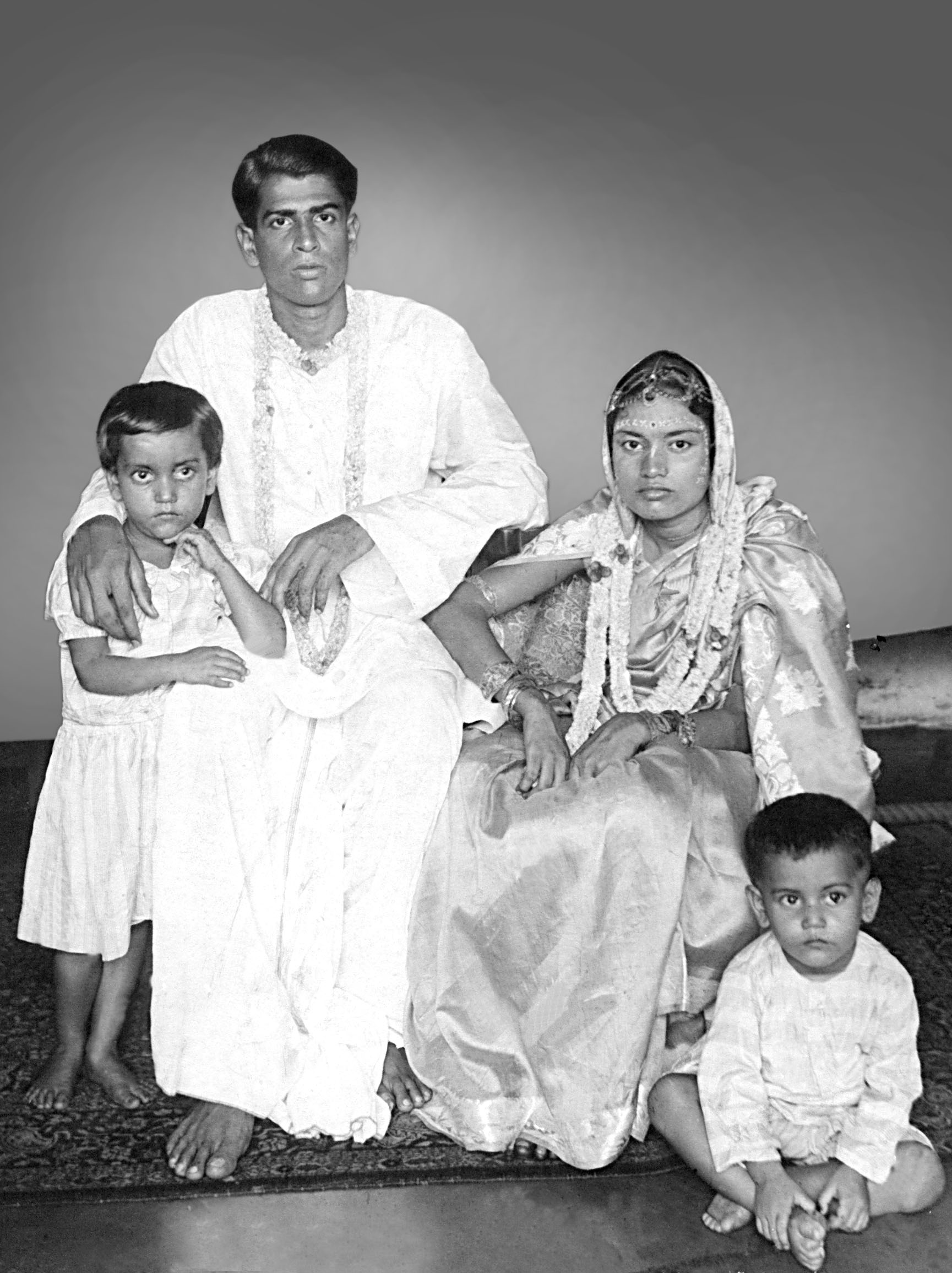
Hare Krishna Konar was born on 5 August 1915 in Burdwan district. Accounts differ on his birthplace: Biman Basu’s centenary article gives Memari, while Wikipedia names Kamargoria. Basu records that he was first arrested in 1930, at the age of fifteen, during the civil disobedience campaign.[1][2]
In the early 1930s he was convicted in a revolutionary case and transported to the Cellular Jail in the Andaman Islands; the CPI(M)’s journal gives his age then as eighteen. In prison he was drawn to Marxism and joined the Communist Consolidation group. After his release in 1938 he joined the Communist Party of India.[1][3]
Wikipedia’s biography dates his arrival at the Cellular Jail to April 1933 and records that he took part in the hunger strike begun there on 12 May 1933 against the conditions of the jail. Three prisoners, Mahavir Singh, Mohan Kishore Namadas and Mohit Moitra, died after being force-fed; the strike ended after 46 days, on 26 June, when the authorities conceded demands that included light in the cells, bedding and the right to study. The same account credits Konar with organising the Communist Consolidation among the prisoners in 1935. On 9 July 1937 he and Shiv Verma petitioned the Viceroy, and on 25 July the political prisoners began a second, mass hunger strike. It lasted 36 days and ended after appeals in August from Gandhi, Rabindranath Tagore and the Congress Working Committee; the government then began returning the Andaman prisoners to jails on the mainland. Konar was released on 27 March 1938.[2]
His political base was rural Burdwan. Basu describes him organising against the canal tax and leading the Ajoy river dam movement of 1944. Konar won the Kalna Assembly seat in 1957, when it returned two members, and again in 1962, 1967, 1969 and 1971, losing it in 1972. After the communist split of 1964 he belonged to the CPI(M) and its Central Committee.[1][4]
He was minister for land and land revenue in both United Front governments: from 1 March to 21 November 1967, and from 25 February 1969 to 16 March 1970. D. Bandyopadhyay, whom Konar appointed director of land records and surveys, describes the government’s drive to vest ceiling-surplus land held clandestinely or under false names (benami). According to his brother Benoy Konar, Hare Krishna held that land reform could not be carried out through the bureaucracy alone. Peasant committees therefore identified and occupied such land alongside the legal process.[2][5][6]
The Naxalbari rising of 1967 tested this approach. Konar held talks with Kanu Sanyal near Siliguri, but the understanding they reached was not implemented and police action followed. Bandyopadhyay records Konar’s view that repression would spread the movement and that meeting the land hunger of poor peasants would weaken it. A contemporary account sympathetic to the rebels presents him differently, citing a newspaper report that he called them “bandits” to be suppressed.[7][5][8]
Konar became general secretary of the All India Kisan Sabha in 1968 or 1969 (sources differ) and held the post until he died of cancer in Calcutta on 23 July 1974.[1][2]
Assessments and debates
The scale of the 1967–70 land movement is measured differently. Wikipedia’s figure of about one million acres refers to land vested by legal process; a comparison reproduced by Atig Ghosh credits peasant committees with taking over about 300,000 acres. Ghosh uses that comparison to argue that the CPI(M) later relied on the bureaucracy rather than mobilisation. Arild Engelsen Ruud’s research in Burdwan villages explains the party’s rural support through an alliance across peasant strata. Ruud records that in the second United Front government Konar called on peasants to occupy illegally held land themselves and leave registration to officials afterwards; he also quotes Konar describing the movement’s “mistakes and excesses” as “typical village politics”. In Ruud’s Raina study village only about 15 bighas were redistributed, mostly in unviable plots that the former owners soon put under court injunction (pp. 106, 111–112, 116).[9] The occupations also brought conflict with landholders, and Benoy Konar later acknowledged the limits of reform conducted within the constitutional framework.[2][10][6]
Most detailed accounts of Konar’s life come from party colleagues and family members, and they should be read as such. A full independent biography has not been located. The community connection rests on Dutta, who names him among Ugra Kshatriya freedom-movement figures in Explorations in Colonial Bengal, p. 314; it is not inferred from his surname.[11]