Chemical engineering · Research · Industry
Life and work
1 August 1923 – 4 August 2019
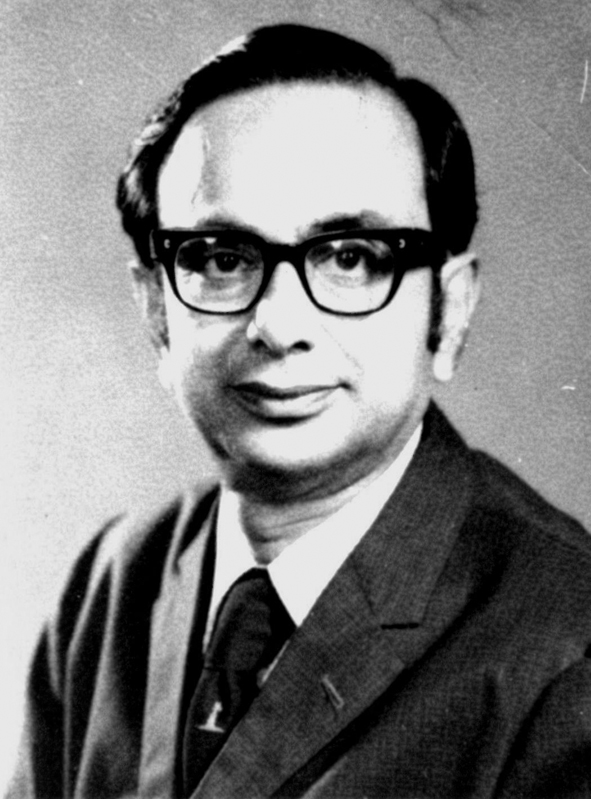
Tuhin Kumar Roy spent his working life bringing chemistry into industry. A researcher, teacher and consulting engineer, he helped develop ways to recover nickel and cobalt from ores and to put Indian technologies into commercial use.[1] His career moved between India and the United States and included technical work in Cuba.[2]
To understand his contribution, it helps to look beyond the moment of discovery. A chemical reaction that succeeds in a laboratory still has to work reliably in a plant. Materials must move through equipment, unwanted substances must be removed, and the desired product must be recovered. This is the territory in which chemical engineering joins scientific knowledge to everyday production. Roy worked on that demanding passage from an idea to an operating process.
Family and cultural roots
Roy was born in Munghyr, Bihar, on 1 August 1923. His father, Rakhal Raj Roy, practised law in Burdwan.[3] Roy belonged to the Aguri community.
Rakhal Raj was also a man of letters, with interests in the history of Burdwan and the preservation of antiquities. His activities connected his legal career with the literary and historical work of the Bangiya Sahitya Parishad.
In 1915, he contributed the Bengali essay বর্তমান বর্দ্ধমান, or “Contemporary Burdwan,” to Sahitya Parishat Patrika. Nagendranath Basu’s introductory notice names him as its author and explains that the essay was published with an account of regional historical enquiries. His writing thus formed part of a shared effort to record and study the region, giving contemporary Burdwan a place alongside its older history.[4]
His support for the Parishad extended to its museum. Manomohan Ganguly’s 1922 handbook credits him with presenting a votive stupa from Patna and, jointly with Shivadas Tewari, a sculpture of Varaha, the boar incarnation of Vishnu, from Burdwan. It also records his gift of a moulded brick from Purushottampur depicting Krishna dancing.[5]
These were practical contributions to a collection in which religious images and architectural fragments could be brought together for study. The range of his gifts, from a Buddhist stupa to images associated with Vishnu and Krishna, reflects the breadth of that involvement. His influence in cultural life can be seen in these specific acts: contributing to a learned journal and helping build a museum collection. The two generations pursued different fields, but both left records of work that extended beyond private professional life.
From Burdwan to MIT
His education took shape in Burdwan before he studied at St Xavier’s College and the University College of Science in Calcutta. He completed a master’s degree in applied chemistry and worked at the Indian Lac Research Institute in Ranchi. An Indian government scholarship took him to the Massachusetts Institute of Technology in 1947.[2]
At MIT he gained a master’s degree in 1949 and completed his ScD in June 1951, researching fluid-bed reactions under Warren K. Lewis and E. R. Gilliland.[3] Fluidization concerns the behaviour of solid particles held in motion by a flowing gas or liquid. It offers engineers a way of bringing materials into contact during processing. Alongside his later work on extracting metals, it remained an important part of Roy’s research.[1]
A Bengali and Estonian family
During his American student years Roy met Silva Mardiste at the International Centre in Harvard Square. They married on 1 January 1951.[3] Silva was Estonian and had studied at Bennington College in Vermont.[6]
A family recollection gives a glimpse of the life they made together. In 1954, after coming from New Jersey to settle in Calcutta, they heard of another Bengali–Estonian couple living on Kid Street. The two families met and became close friends. The account recalls that both marriages had faced family opposition, yet both couples chose to make their homes in India.[6]
Their friendship continued as Roy’s work took his family from Calcutta to Delhi and the other family moved to Dehradun. The recollection also remembers Silva’s involvement with nursery schools.[6] Such details place a household and a network of friendships beside the more familiar chronology of degrees and appointments. Roy’s journeys were family moves as well as professional ones, and his return to India involved building a shared home across different cultural backgrounds.
Making metals separable
Ores contain mixtures. Dissolving valuable material is only part of the task; unwanted substances still have to be separated. Roy and his collaborator Felix Alfred Schaufelberger developed methods for making these separations more selective.[7][8]
Their first relevant American patent, filed in June 1954 and granted in December 1955, concerned the recovery of nickel and cobalt from acidic solutions. It described a method of bringing the metals out of solution as sulphides while leaving much of the unwanted dissolved material behind. Small solid particles helped the new precipitate form under controlled conditions. The patent was assigned to Chemical Construction Corporation.[7]
Precipitation turns a dissolved substance into a solid that can be collected. The challenge is to recover the desired substances without carrying too much unwanted material with them.[7]
A second patent, also filed in June 1954 and granted in March 1957, dealt with separating cobalt, nickel and manganese. It described a sequence in which adjustments to the solution and the treatment of its constituents allowed the metals to be separated in stages. Both patents named Roy and Schaufelberger as inventors.[8]
These inventions belong to hydrometallurgy, the extraction and separation of metals using solution-based processes. Extracting a metal from ore and separating it from other metals require related but different operations.[7][8] He also published “Preparing Nickel and Cobalt Concentrates” in Industrial & Engineering Chemistry in 1961.[9]
Teaching and industrial design in India
Roy returned in 1954 to lead chemical engineering at Jadavpur. After another period in the United States and a brief return to Jadavpur, he settled in Delhi, where he helped build the enterprise that became Chemical Metallurgical Design Company.[2]
Industrial Consulting Bureau began with S. N. Mazumdar in 1960; it took the CMDC name in 1965. Roy became managing director after returning from further American employment.[3] The consultancy provided a setting in which engineering experience could be applied to Indian manufacturing problems.
The Indian National Academy of Engineering particularly recognised his contribution to bringing technologies developed in India into commercial production. His work also extended to coal-processing projects. Beyond his own research, he served as president of the Indian Institute of Chemical Engineers and the National Association of Consulting Engineers.[1]
A consultancy occupied a different place from a university laboratory. Its work had to connect the proposed process with the plant that would carry it out. For Roy, teaching and industrial practice remained closely connected parts of a career that repeatedly crossed between the two.
Work in Cuba and the later years
Che Guevara sought Roy’s help with Cuba’s Moabay nickel plant. Banerjee’s obituary describes substantial improvements by Roy’s team and reports eventual operation at 80 per cent of designed capacity.[3] S. S. Das Gupta recalled accompanying him to Cuba in March 1967.[10]
The assignment brought experience gained in American industry into the effort to restore Cuban production after relations with the United States deteriorated.[2] It also shows why an engineer’s influence can reach beyond a laboratory or a university. Keeping an industrial plant working involves technical decisions with consequences for the people and institutions that depend on its output.
Roy became a Fellow of the Indian National Academy of Engineering and served as its honorary treasurer from 1993 to 1995. The Indian Institute of Chemical Engineers honoured him with its Diamond Award in 2007.[1] After a stroke in 2008, he continued visiting the institute in a wheelchair and began a book on extracting metals.[3]
He died on 4 August 2019, three days after his ninety-sixth birthday.[1] His career brought a sustained practical purpose to research: understand a process well enough to make it useful. The teaching, patents and consultancy work were different expressions of that purpose, carried through a life shaped by Bengal and by long professional relationships abroad.