Dermatology · Medical research · Publishing
Life and work
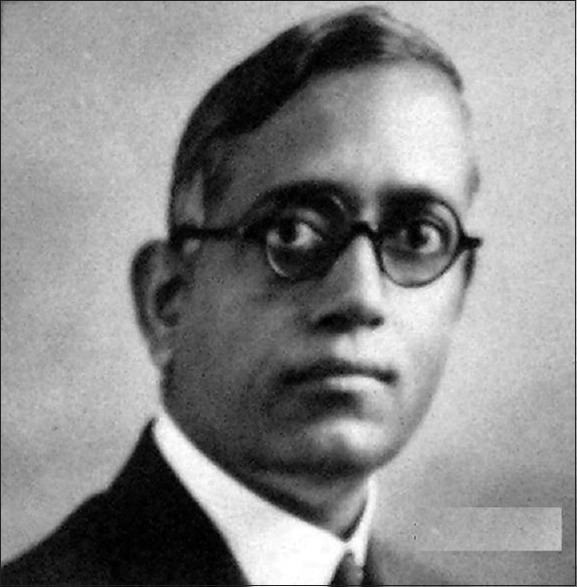
When a skin outpatient clinic opened at the Calcutta School of Tropical Medicine in 1922, Ganapati Panja was at the beginning of a career that would help shape the study of skin disease in India. He had joined the school as an assistant professor in 1921. Working alongside Hugh W. Acton, he helped establish its dermatology department in 1923, bringing the care of patients into close contact with teaching and laboratory investigation. [1][3][4]
The road from Majigram
The road to that appointment began in Majigram, in the former Burdwan district. Baridbaran Ghosh’s Bengali biography describes a childhood marked by poverty and orphanhood at about seven. It credits Maharaja Manindra Chandra Nandy of Cossimbazar with supporting Ganapati and his younger brother, Dhanapati, and enabling Ganapati’s education at Hindu School, Presidency College and Calcutta Medical College. He qualified in 1919. [1]
His origins also connect his story with the history of the Aguri community. Historian Achintya Kumar Dutta includes Panja among its intellectual figures. [2]
From the patient to the microscope
One of his early research problems concerned seborrhoeic dermatitis: inflamed, flaky skin, often around the scalp and other oil-rich areas. Dandruff is a familiar, milder form of scalp scaling. Researchers were investigating the association of these conditions with Malassezia, microscopic yeasts that can live on human skin. [5][9]
In 1927, Panja achieved what a major historical review by H. Ruth Ashbee and E. Glyn V. Evans describes as the generally accepted first successful laboratory isolation of the organism, while acknowledging earlier claims. Isolation meant obtaining it from a sample so that it could be grown and examined separately. Panja had not discovered the yeast itself, which was already known; he had helped make it accessible to experimental study. His work belonged to a wider, sometimes disputed effort to distinguish and classify related fungal forms. [5]
A Rockefeller scholarship took him to London for bacteriology research in 1932, extending his study of microbes. [1] The distinction between finding a microbe and establishing it as the cause of disease became central to his 1936 paper, “Infantile Eczema”. Eczema means inflamed, often itchy skin. Drawing on experience of about 250 cases, he examined 30 in greater detail. Of 23 children whose skin or scalp scrapings were tested, none showed yeast under direct microscopic examination, and only three samples produced cultures. These observations led him to question the idea that infantile eczema generally began as a yeast-associated scalp disorder. [7]
His interests extended beyond those yeasts. With C. L. Pasricha, he studied diphtheritic skin ulcers known as “Garigha” in the Chittagong Hill Tracts in 1940. Diphtheria is usually associated with the throat, but its bacterium can also occur in skin wounds. A later United States Army medical history discussed their findings, while noting that an experimental conclusion still needed confirmation. [10]
Meanwhile, growing Malassezia in sufficient quantity remained a practical obstacle: earlier cultures produced only tiny, sparse colonies. Following Rhoda Benham’s 1939 demonstration that the yeast needed fatty substances, Panja described an oil-enriched medium on which it grew more abundantly. A medium supplies the nutrients an organism needs in the laboratory. More reliable growth meant more material for comparison and experiment. He presented this work at the Indian Science Congress in Benares in 1941 and published it in 1946. [5][6]
By 1946, he held the title of Professor of Bacteriology and Pathology and the London D.Bact. qualification. Those disciplines brought complementary tools to his work: bacteriology investigates bacteria, while pathology examines how illness changes the body’s tissues. [6]
A rare infection and a new journal
In March 1954, Panja and S. Sen published “A unique case of histoplasmosis” in the Journal of the Indian Medical Association. Later research identifies their Calcutta report as India’s first reported case of disseminated histoplasmosis. [8][11]
Histoplasmosis is caused by the fungus Histoplasma; “disseminated” means that the infection has spread through the body rather than remaining in one place. Their report gave other doctors a documented case against which to compare their observations. [8][11]
The following year, Panja took on a larger role in publishing the work of his profession. In June 1955, he became editor-in-chief for dermatology at the Indian Journal of Dermatology and Venereology, with R. V. Rajam responsible for venereology. In October he launched the separate Indian Journal of Dermatology. The new journal provided a forum for clinical observations and research. He remained its editor for the rest of his life. [4]
Beyond his professional work
His commitment to education also reached back to his home village. He established Bisweswari High School and Binodbehari Panja Lower Basic School in memory of his parents. Ghosh’s biography records his death on 7 September 1959. [1]
The family’s wider public life
Medicine remained important in the family, but it was not the only route to public distinction. Dhanapati also became a dermatologist. His sons, Ranjit and Ajit, were Ganapati’s nephews; Ganapati’s own son was Salil. [1][13][14][16]
Dr Ranjit Kumar Panja (1932–2006) combined clinical teaching with elected office. Trained at Calcutta Medical College and the Royal College of Physicians, Edinburgh, he served as Professor of Dermatology at Calcutta Medical College from 1974 to 1990 and became president of the Indian Association of Dermatologists, Venereologists and Leprologists. Elected to the Lok Sabha from Barasat in 1998, he served on the Human Resource Development Committee and its subcommittee on medical education. He was re-elected in 1999. [14][18]
His brother Ajit Kumar Panja (1936–2008) pursued law and politics. Educated at Scottish Church College and Lincoln’s Inn, the barrister held ministerial office in West Bengal before representing Calcutta North-East in six successive Lok Sabhas from 1984 to 2004. His Union responsibilities included Information and Broadcasting, Finance, Coal and External Affairs. Parliament’s obituary also recalled his books and stage acting, reflecting a public presence that extended into Bengali cultural life. [13][15]
Their cousin, Professor Salil Kumar Panja (1934–2023), headed dermatology departments at IPGMER and SSKM Hospital and at Calcutta National Medical College, helping develop specialist teaching and postgraduate training. He also edited the Indian Journal of Dermatology and served as a national president of the dermatologists’ association. [16]
In a later generation, Dr Shashi Panja, Ajit’s daughter-in-law and a physician by training, entered public administration. Her ministerial responsibilities in West Bengal included women and child development and social welfare in 2021, and industry in 2023. [17]
A lasting place in the profession
After Ganapati’s death, the journal continued to develop under his successors, gaining inclusion in Index Medicus in 1962. [4] The Professor Ganapati Panja Memorial Award, maintained by the Indian Association of Dermatologists, Venereologists and Leprologists, gives his name an enduring place in the profession. [12]
Sources and further reading
References distinguish original papers, retrospective biographies and parliamentary records. Historical medical descriptions explain the research and are not treatment recommendations.
- Baridbaran Ghosh. Bengali biography of Ganapati Panja. Anandabazar Patrika, 2 January 2017. Source for family, education, scholarship, village schools and exact death date. Read the Bengali biography
- Achintya Kumar Dutta. “Prosperity, Dominance, and Social Mobility: Emergence of a Mobile Caste in Colonial Southwest Bengal” (2023), pp. 297–324, especially 313–314. Publisher record
- “Tropical Dermatology.” The Indian Medical Gazette, August 1927. Contemporary account of the clinic and research staff. Read the historical article
- Saumya Panda. “Sixty Years of the Indian Journal of Dermatology: An Interpretation of the Journey.” Indian Journal of Dermatology 60(6), 2015. DOI 10.4103/0019-5154.169121. Read the journal history
- H. Ruth Ashbee and E. Glyn V. Evans. “Immunology of Diseases Associated with Malassezia Species.” Clinical Microbiology Reviews 15(1), 2002, pp. 21–57. DOI 10.1128/CMR.15.1.21-57.2002. Read the scholarly review
- G. Panja. “A New Oil Medium for Enhancement of Growth of the Malassezia and Subsequent Study of Serological Reactions and Pathogenicity.” The Indian Medical Gazette 81(8), 1946, pp. 305–306. Presented in 1941. Read Panja’s paper
- Ganapati Panja. “Infantile Eczema.” The Indian Medical Gazette 71(9), 1936, pp. 506–511. Read Panja’s paper
- G. Panja and S. Sen. “A unique case of histoplasmosis.” Journal of the Indian Medical Association 23(6), March 1954, pp. 257–258. PubMed PMID 13152378. Record has no abstract. View the original publication record
- “Topographic Differential Diagnosis of Chronic Plaque Psoriasis: Challenges and Tricks.” Journal of Clinical Medicine, 2020. Used for the plain-language distinction between dandruff and seborrhoeic dermatitis. Read the clinical review
- United States Army medical history, Infectious Diseases, volume II, chapter on cutaneous diphtheria. Cites C. L. Pasricha and G. Panja, “Diphtheritic Ulcers of the Skin: The Garigha of Chittagong Hill Tracts,” Indian Journal of Medical Research 27, 1940, pp. 643–650. Read the historical discussion
- Jinal Soni, Atul Gogia and Anivita Aggarwal. “Histoplasmosis in India: clinical insights from a tertiary care hospital.” BMC Infectious Diseases 25, 1524 (2025). DOI 10.1186/s12879-025-11862-x. Read the study and historical attribution
- Indian Association of Dermatologists, Venereologists and Leprologists. Awards and Orations. Includes the Professor Ganapati Panja Memorial Award. View the association’s award records
- Lok Sabha. Biographical sketch of Shri Ajit Kumar Panja, Eleventh Lok Sabha, reproduced by IndiaPress. Names his father and records education and early career. Biographical record
- Lok Sabha. Biographical sketch of Dr Ranjit Kumar Panja, Twelfth Lok Sabha, reproduced by IndiaPress. Names his father and records academic appointments, professional leadership and parliamentary work. Biographical record
- Lok Sabha. Obituary references, 10 December 2008. Official parliamentary account of Ajit Kumar Panja’s six Lok Sabha terms, ministerial service and death. Parliamentary obituary
- Kingshuk Chatterjee, Sudip Das and Neena Khanna. “Prof. Salil Kumar Panja (29/July/1934–31/August/2023).” Journal of Medical Evidence 4(3), 2023, pp. 298–299. DOI 10.4103/jme.jme_167_23. Medical obituary Obituary text consulted through its OpenAlex record.
- West Bengal Government, press note, 28 June 2021; The Statesman, interview with Shashi Panja, 21 October 2023. Dated evidence of her ministerial roles and relationship to Ajit. Government record | Interview
- “Ranjit Panja dead.” The Telegraph, 2006. Used for his death year and re-election in 1999. Read obituary